Press Releases

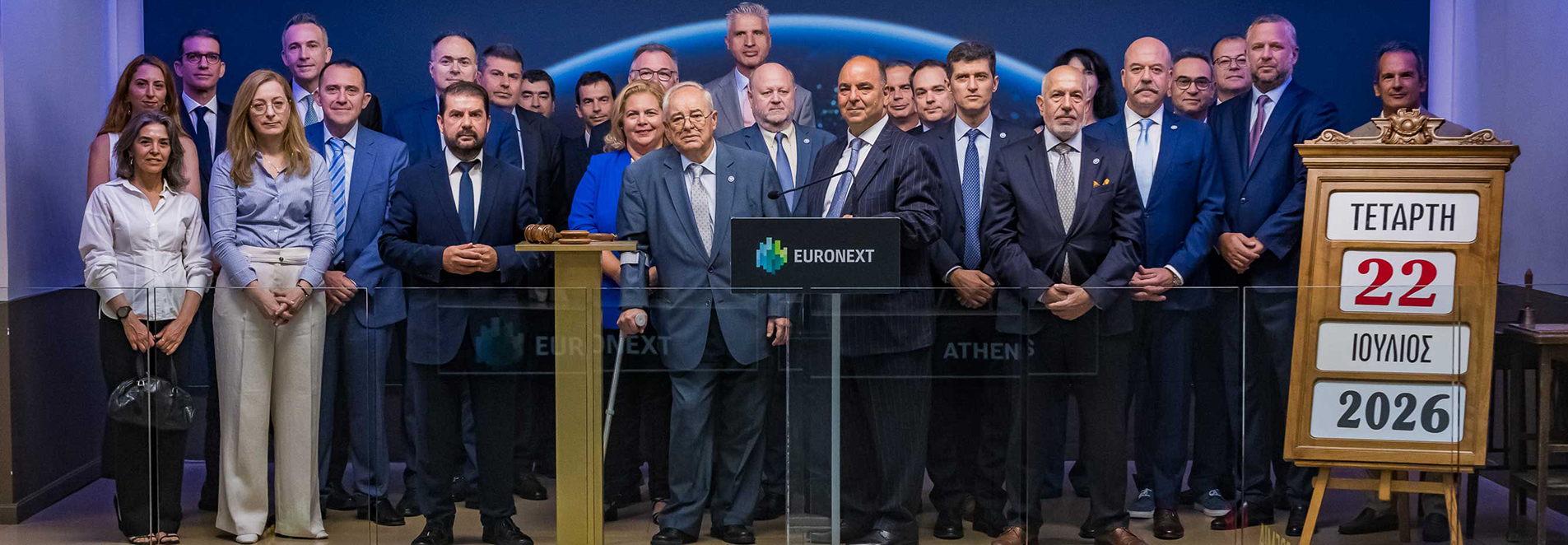
ElvalHalcor, has co-signed the “Made in Europe: produce in Europe or disappear, the time for choice is now” Statement.
The Declaration was launched on the initiative of A3M (Alliance of Minerals, Metals Ores and Metals), the French federation representing the mining, metallurgy, steelmaking and metal recycling industries. It was subsequently placed under the patronage of the French Ministry of Economy, which published it on its official website, and it is now gathering signatures from hundreds of European companies. Its central objective is to strengthen industrial production within the European Union.
The Statement is directly linked to the Industrial Accelerator Act, the legislative proposal presented by the European Commission in March 2026, which is currently under negotiation in the Council and the European Parliament, with the aim of being adopted by the end of the year.
The Industrial Accelerator Act focuses on the reindustrialisation of Europe, placing it within the broader objective of strengthening the European Union’s strategic autonomy. In this context, the proposal links, for the first time, companies’ access to state aid, whether financed through EU or national resources, to the requirement that a share of their production is demonstrably carried out in Europe.
As highlighted in the Statement endorsed by ElvalHalcor, international competition has become increasingly unfair and ruleless due to ‘’tariffs, massive subsidies aimed at exports, the use of our dependencies as geopolitical leverage’’. In this new environment, the Declaration stresses that “Europe must be a power that produces, not merely a market that consumes. Because industry is a country's greatest asset.”
This requires making the “Made in Europe” choice: using public funds to produce more in Europe and to encourage greater investment in Europe.
The “Made in Europe” Statement aims to support the European Commission’s proposal at a particularly challenging stage of the negotiations, as certain Member States have expressed reservations regarding the potential impact of the regulation on the EU’s relations with its trading partners.